What's a Community Forest?
Imagine yourself in a forest.
You’re walking down a path as sunlight gently filters through the trees. A brook babbles to your left. A still pond mirrors the sky to your right. In the distance a picturesque hill rises silently against the horizon. It’s a windy day, but here beneath the trees you are safe from its full force.
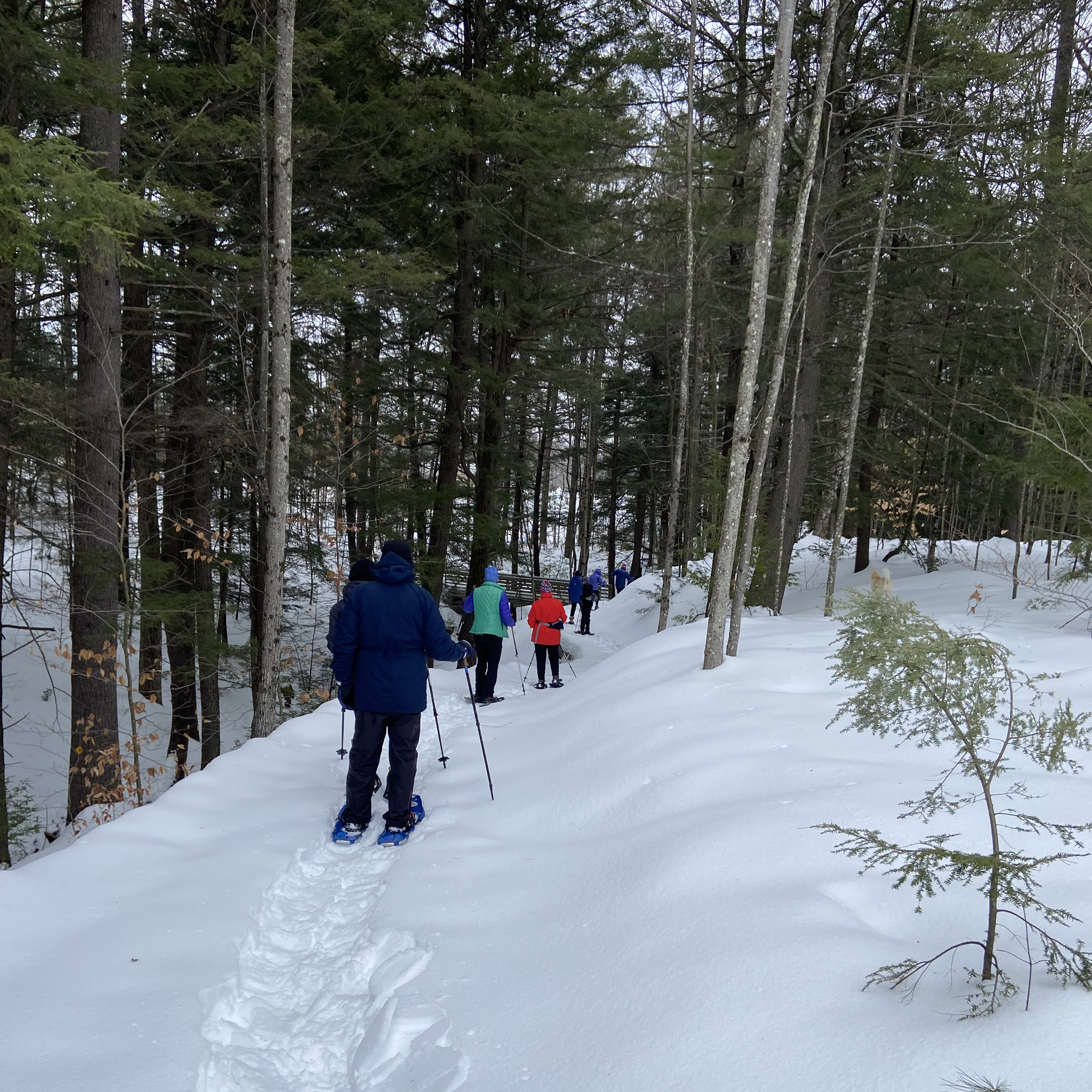
Along the trail you pass birdwatchers looking for signs of life in the trees. A teacher has turned the woods into his classroom for students who are studying leaves and lichens. A couple simply strolls hand-in-hand, enjoying- the peaceful woods.
Everyone is here for a different reason, yet they are bonded by one common idea: they find value in and connection with the forest.
This forest could exist anywhere. It could be in New England, or across the world. What makes it special isn’t just its location. It’s the sense of community it creates.
Today, that sense of place is under threat. As development accelerates communities are understanding that forests like these should not be taken for granted. Losing these lands would mean losing a way of life.
Many forests play a critical role in protecting local water supplies. When this land is overdeveloped, the risk of contamination increases.
Wildlife suffers too. Birds lose places to build their nests, foxes lose land for their burrows, and trout lose the cool, shaded streams needed to survive. In some cases a single forest connects multiple wildlife corridors, meaning its loss ripples far beyond the boundaries.
Without the community’s voice in what happens to these lands, there’s no guarantee they’ll remain forests for everyone.
That’s where Community Forests come in. Over the last 30 years, towns and nonprofit organizations have stepped up to acquire and protect local forests. This ensures they remain in local hands and reflect local values. Decisions and input are made by people who walk the trails, study the streams, harvest trees responsibly, and call the area home.
Committees are formed to represent the many ways people connect with the land. They may represent mountain bikers, foresters, local educators, business people, conservationists, and other community members who find value in the land. Together they help guide the future of the forest.
The Upper Saco Valley Land Trust currently stewards three Community Forests in New Hampshire:
- Pine Hill Community Forest in Conway
- Dundee Community Forest in Jackson
- and Chain of Ponds Community Forest in Madison.
Across each Community Forest the goal is the same: not simply to prioritize wildlife habitat, recreation, or economic return, – but to ensure the land can benefits the community as a whole.
"Community forests are a long term marriage between a property and a community,” says Julie Renaud Evans, Program Director of the Northern Forest Center. "The magical part about them is that each one is unique, because they reflect the values of that community.”
For these forests to thrive, they need communities.
Whether you’re helping clean trails, removing invasive plant species, serving on a committee, or simply coming to a program to learn more, you’re doing more than caring for the forest. You’re strengthening the fabric of your community.
If you’d like to get involved, reach out to efarrell@usvlt.org to learn how you can help.
The forests are here for all of us. Let’s make sure they stay that way.